Türkçe
 English
 Deutsch
 Français
 Español
 Italiano
 Русский
 العربية

A titanium post placed in the jawbone to replace a missing tooth root, topped with a porcelain crown. A lasting solution from a single missing tooth to a full arch.
- Duration
- 30 to 60 minutes per implant
- Anaesthesia
- Local (sedation on request)
- Recovery
- 2 to 3 days to normal routine, 3 to 6 months for bone bonding
- Longevity
- Lifelong with regular care
What is a dental implant?
A dental implant is a titanium post placed into the jawbone where a tooth has been lost. Once the bone has bonded with the post, a porcelain crown is fitted on top. The result looks, feels and chews like a natural tooth.
Unlike a bridge, an implant does not require grinding down the neighbouring teeth. Unlike a removable denture, it stays fixed and helps slow bone loss in the jaw.
Who is a candidate?
- Adults missing one or more teeth
- People who struggle with removable dentures
- Anyone whose jaw has finished growing and whose general health allows minor surgery
Uncontrolled diabetes, heavy smoking and certain bone medications can affect success. These do not rule implants out; after an examination and a CT scan your surgeon prepares a plan tailored to you.
How is it done?
Examination and planning
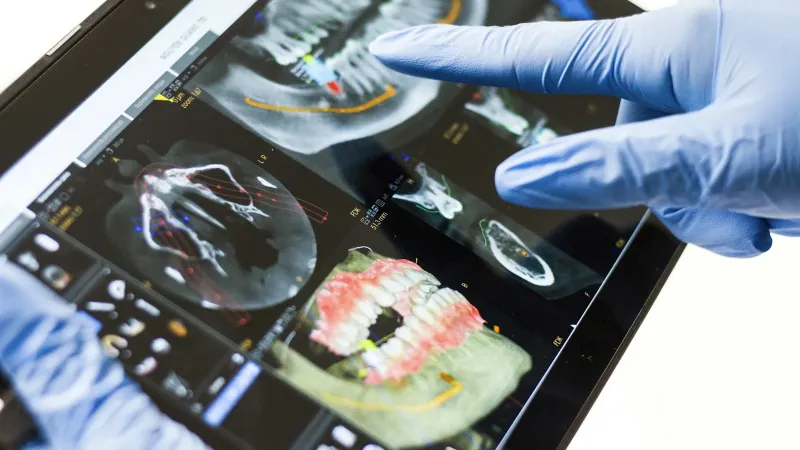
A 3D scan measures the height and width of the bone. This determines the implant size and whether bone grafting is needed.
Placing the implant
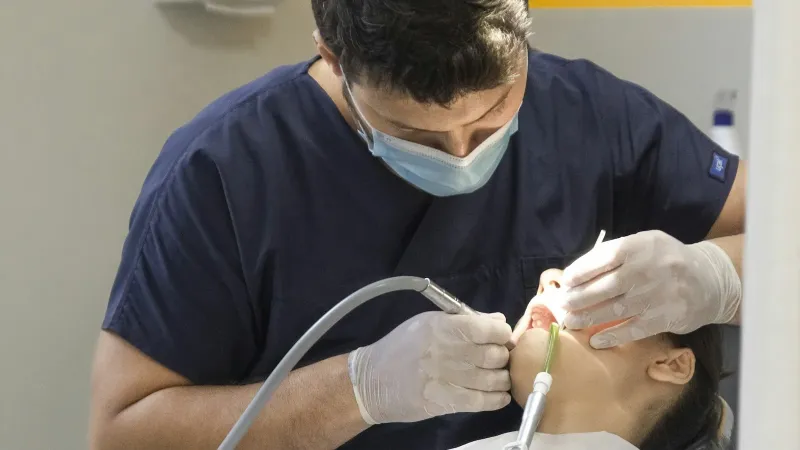
The procedure is carried out under local anaesthesia and feels similar to a tooth extraction. A single implant usually takes about half an hour. A temporary tooth can often be fitted the same day.
Healing period
The bone bonds with the implant over roughly 3 months in the lower jaw and 4 to 6 months in the upper jaw. Eating and speaking are comfortable during this time.
Fitting the crown
Impressions are taken, the shade is chosen and the final crown is screwed or cemented onto the implant.
Recovery and care
Mild swelling and tenderness for a few days are normal; a cold compress and the medication prescribed are enough. Most patients return to work the next day. The lifespan of an implant depends on daily brushing, interdental brushes and a check-up every six months.
Why a university hospital?
Oral Surgery, Periodontology and Prosthodontics work under one roof. If bone grafting, a sinus lift or gum reshaping is needed, the right specialist is in the same building.
Frequently Asked Questions
Is getting an implant painful?
No pain is felt during the procedure thanks to local anaesthesia. Mild tenderness for a day or two afterwards is relieved with simple painkillers.
How long do implants last?
With regular brushing and check-ups they last for decades. If the crown wears out, only the crown is replaced.
Can I have an implant if my bone is thin?
Usually yes. Bone grafting or a sinus lift can build up enough bone for a secure implant.
Can a tooth be fitted the same day?
In suitable cases a temporary tooth is fitted on the day. The permanent crown is made after the bone has healed.
 Prof. Dr. Mustafa Cenk DURMUŞLAROral & Maxillofacial Surgery