Türkçe
 English
 Deutsch
 Français
 Español
 Italiano
 Русский
 العربية
What does Prosthodontics cover?
Prosthodontics aims to replace lost teeth and tooth structure with artificial restorations. It covers a wide range, from crowns that cover a single tooth to implant-supported complete dentures used when all the teeth have been lost.
Prosthetic planning is not limited to filling the gap left by a missing tooth. The jaw joint, the bite relationship, gum health and facial esthetics are evaluated together. In complex cases, treatment is planned jointly with the Periodontology, Orthodontics and Oral & Maxillofacial Surgery departments.
Fixed prostheses
Crowns cover and protect teeth that have had root canal treatment or that have been weakened by a large filling. The materials most often chosen today are metal-free zirconia and all-ceramics; their light transmission is close to that of a natural tooth, and they do not cause gray discoloration at the gum line.
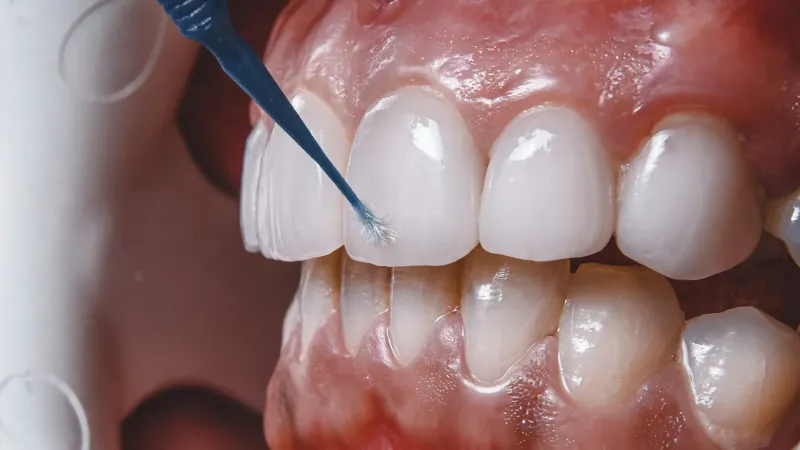
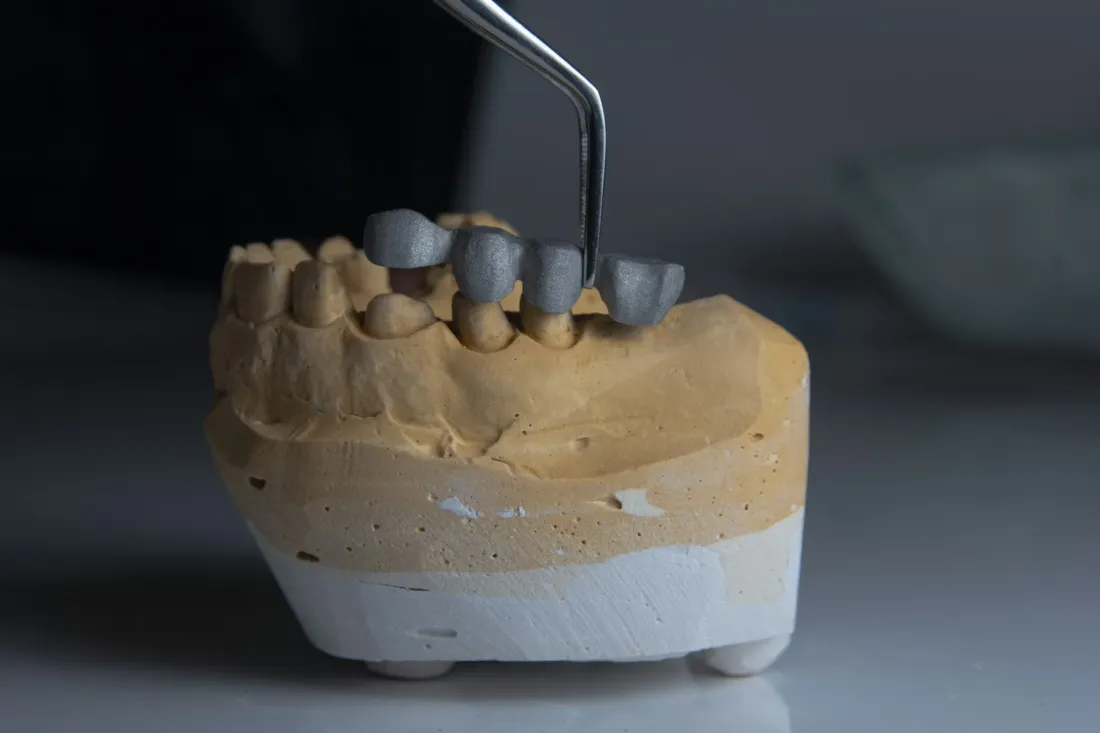
Bridges close a gap by taking support from the teeth on either side of the missing tooth. Implant-supported crowns and bridges replace missing teeth without touching the neighboring teeth. Laminate veneers are thin porcelain shells bonded only to the front surface of the front teeth, solving color, shape and minor position problems with very little loss of tooth structure.
Removable prostheses and digital production
When many teeth are missing, removable partial dentures are used, and when all the teeth have been lost, complete dentures. Implant-retained dentures that sit on implants eliminate the loosening problem of conventional complete dentures and clearly increase chewing power.
Our department uses intraoral digital scanners and CAD/CAM systems. Instead of impression material, a digital scan is taken, the restoration is designed on a computer and produced with precision in the laboratory. In smile design, the result is shown to the patient with digital and temporary restorations before treatment begins.
Treatments in This Department
Zirconia and all-ceramic crowns
Metal-free, natural-looking and durable dental crowns.
Bridges
Fixed replacement of missing teeth with support from the neighboring teeth.
Implant-supported crowns and bridges
Fixed restorations screwed or cemented onto implants.
Laminate veneers
Thin porcelain shells for the esthetics of the front teeth.
Smile design
Digital planning in harmony with the facial features, lip line and gums.
Inlay and onlay restorations
Laboratory-made partial porcelain or composite restorations.
Removable partial dentures
Removable dentures with a metal framework or made of flexible material.
Complete dentures and implant-supported complete dentures
Conventional or implant-retained solutions when all the teeth have been lost.
TMJ and bruxism splints
Night guards for wear and jaw joint complaints caused by clenching and grinding.
Frequently Asked Questions
Which is better, zirconia or porcelain?
Zirconia-based and monolithic zirconia crowns offer high durability, while all-ceramic (lithium disilicate) crowns are superior in esthetics for the front teeth. The choice of material is made together with your dentist, based on the position of the tooth, the bite forces and your esthetic expectations.
How long does it take to make a crown or veneer?
With digital impressions and laboratory production, most fixed prostheses are completed within 5 to 10 days. Temporary crowns are worn during this period.
Is a lot of tooth removed for laminate veneers?
No. For a veneer, only 0.3 to 0.7 mm of enamel is removed from the front surface of the tooth; in some cases no preparation is needed at all.
How long do prostheses last?
Well-maintained fixed prostheses can be used for 10 to 15 years or more. Regular check-ups, flossing and, if you clench at night, wearing a splint all extend their lifespan.
My complete denture is loose. What can I do?
Implant-retained dentures that sit on two or four implants placed in the lower jaw eliminate loosening. Relining your existing denture is also a short-term solution.
Doctors of the Department