Türkçe
 English
 Deutsch
 Français
 Español
 Italiano
 Русский
 العربية
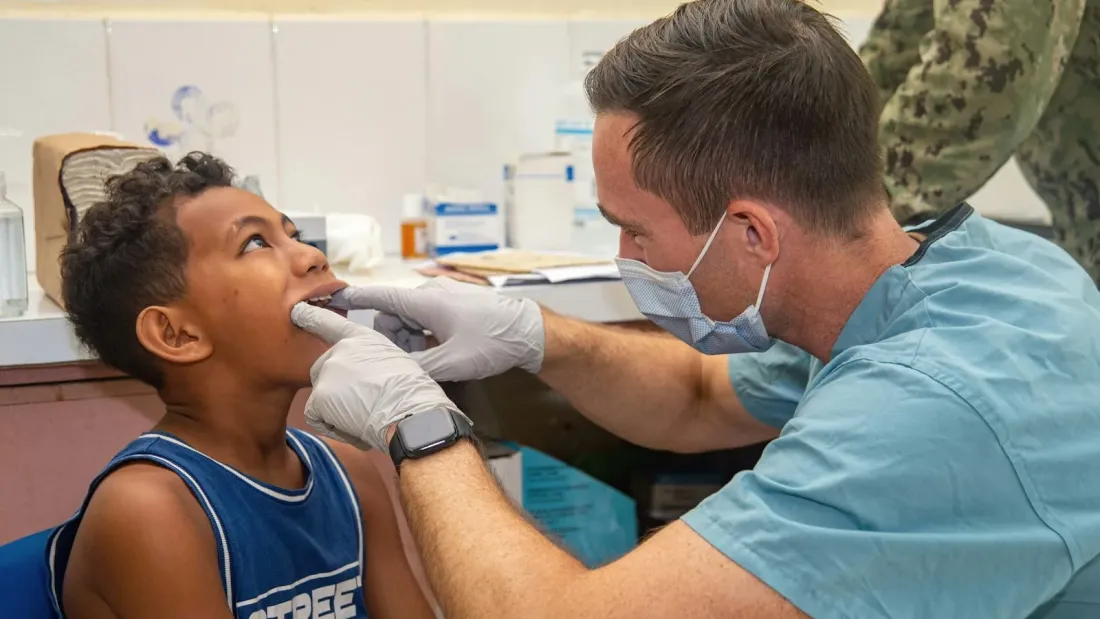
Preventing decay before it starts by sealing the deep grooves of children's molars and strengthening enamel with fluoride.
- Duration
- 5 to 10 minutes per tooth
- Anaesthesia
- Not needed
- Age
- 6 to 14 (adults too)
- Repeat
- Fluoride every 6 months
Why preventive care?
Most cavities in children start in the deep grooves on the chewing surfaces of the molars. Toothbrush bristles cannot reach into these grooves. Fissure sealants and fluoride are two short, painless treatments that protect the tooth before decay begins. They are cheaper than fillings and far better for the tooth.
Fissure sealants
The grooves of the molar are cleaned, a flowable filling material is painted into them and cured with light. The surface becomes smooth so food cannot get trapped. No drilling and no anaesthesia.
- Applied when the first molars come through at 6 to 7 and the second molars at 11 to 13
- Also suitable for baby molars and premolars with deep grooves
- Worn sealant is easily topped up at check-ups
Fluoride application
Fluoride makes enamel more resistant to acid and is painted onto the teeth as a varnish. It takes a few minutes; afterwards avoid eating for half an hour. Repeating it every six months is recommended. Early white-spot decay can be halted with fluoride.
Is fluoride safe?
The varnish applied by a dentist is a low, controlled dose recommended by paediatric dentistry bodies worldwide. What matters is that the child does not swallow toothpaste and uses an age-appropriate amount.
What to do at home
Brushing twice a day with fluoride toothpaste, giving sweet snacks with meals rather than between them, and a check-up every six months make the protective treatments last.
Frequently Asked Questions
How long do sealants last?
On average three to five years. Worn areas are topped up at check-ups.
My child is scared. What is the clinic like?
The Paediatric Dentistry department works with child-friendly equipment and techniques; the first visit is usually planned as an introduction and familiarisation.
Can adults have sealants?
Yes, on teeth with deep grooves and a high risk of decay.
 Prof. Dr. Gamze ARENPediatric Dentistry (Pedodontics)